In October 2021, reports suggested that automotive chip supply was beginning to improve. Semiconductor manufacturers had announced automotive MCU expansion targets, production in Malaysia was recovering, some intermediary prices were falling, and vehicle plants were restoring shifts. At the same time, industry organizations and foundries warned that shortages had not disappeared and could take several quarters to reach automakers.
Every company plan, capacity figure, price movement, utilization rate, vehicle impact, and recovery date in this article is limited to information reported on 19 October 2021. It does not describe today's semiconductor market. The enduring lesson is that announced capacity, fab utilization, distributor prices, qualified parts, and vehicle output are different recovery indicators.
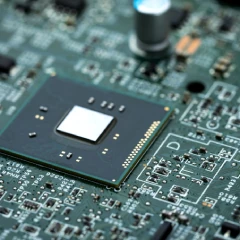
What the October 2021 signals showed
The period report cited expansion statements from Renesas, Infineon, and TSMC. The time horizons differed: one target extended toward 2030, another concerned the next year's investment, and another described an increase in automotive MCU output during 2021. These figures could not be added together as one immediate capacity increase.
The article also described improved factory utilization in Malaysia after restrictions eased. This was a positive sign for assembly and test operations, but utilization alone did not identify product mix, yield, backlog, or shipment timing. An 89% utilization rate at surveyed equipment makers was not equivalent to 89% availability for every automotive MCU.
Reports of lower prices in intermediary channels suggested reduced panic or inventory release. They did not prove that authorized automotive supply had normalized. Spot prices can fall while a specific qualified package remains allocated.
Capacity announcement versus usable automotive output
Semiconductor capacity takes time to convert into approved product. New or expanded equipment must be installed, qualified, staffed, supplied with materials, and brought to stable yield. The device then proceeds through wafer probe, assembly, final test, logistics, and Tier 1 manufacturing.
Automotive programs also require controlled process and product qualification. Moving a device to another fab, package site, or process may need customer notification, validation, and approval. A general-purpose MCU from available stock cannot automatically replace a vehicle-qualified part with the same core or pin count.
Forecasts should therefore separate installed wafer capacity, qualified device capacity, committed customer allocation, and delivered modules. Each has a different date and confidence.
Why vehicle production lagged the fab
The source noted that foundry improvement could take quarters to flow into OEM plants. A vehicle needs the correct combination of hundreds of electronic parts. Additional supply of one controller is useful only if memory, power devices, sensors, substrates, connectors, and other constrained components are also available.
Backlog creates another delay. Early output serves past-due orders before normal replenishment. Tier 1 suppliers then build ECUs, validate them, and ship to vehicle plants. Automakers must align parts with model-specific schedules, labor, and logistics.
Partial shortage is not the same as no shortage
The October report described a transition from broad shortage toward shortages concentrated in some parts. This phase can be operationally harder because the constrained item changes. Teams may assume the crisis is over and reduce attention while one low-cost device still stops a program.
A part-level dashboard should track manufacturer, package, fab, assembly site, inventory, consumption, backlog, confirmed supply, alternate status, and vehicle program. Aggregate semiconductor spend or total chip count cannot reveal the specific blocker.
Electrification increased semiconductor dependence
The 2021 article connected electrification and intelligent functions with increasing semiconductor value in vehicles. It cited forward-looking percentages for electric-vehicle silicon content; those projections are not repeated as current facts here. The technical direction was clear: battery, drive, charging, body, sensing, connectivity, and compute added semiconductor functions.
More electronics also meant more interface dependencies. Power and data had to move through connectors, terminals, bus links, high-voltage assemblies, and low-voltage harnesses. Supply recovery needed coordination across active and passive components.
OEM restart risks
Vehicle plants restoring second or third shifts could create a sharp demand rebound. Suppliers that reduced labor or material during the shortage might become the next bottleneck. Rapid ramp also raises quality risk through overtime, new operators, expedited materials, deferred maintenance, or alternate sources.
Before increasing output, suppliers should run build-at-rate trials, confirm material and tooling, check calibration, review process capability, and verify traceability. Quality gates should not be weakened to clear backlog.
Connector and harness planning
Harness demand can change later than chip availability because release schedules follow vehicle builds. A supplier needs model, plant, configuration, and restart timing rather than a general statement that automotive supply is improving. Variant mix matters: the wrong connector or branch assembly cannot satisfy another model's demand.
A custom automotive harness sourcing guide can help define circuits, drawings, environment, validation, volume, and change control before ramp. For automotive interface selection, the connector portfolio overview is an entry point; vehicle approval requires exact application evidence.
Indicators that supply is genuinely improving
- Authorized suppliers meet confirmed dates across multiple delivery cycles.
- Lead times fall for the exact automotive parts, not only commercial equivalents.
- Backlog declines without large cancellation or double-ordering distortion.
- Package, substrate, and test capacity improve alongside wafer fabrication.
- Tier 1 suppliers restore module output and reduce past-due orders.
- Vehicle plants sustain schedules without repeated feature deletion or incomplete builds.
- Spot-market dependence and counterfeit risk decline.
- Quality, yield, and change controls remain stable during the ramp.
A forecast template
- Define what “recovery” means: fab output, component delivery, module delivery, or vehicle production.
- Map the constrained process and every downstream cycle time.
- Separate announced, installed, qualified, allocated, and shipped capacity.
- Model base, early, and delayed scenarios with explicit assumptions.
- Identify the next likely bottleneck after MCU supply improves.
- Update weekly using deliveries and consumption, not headlines alone.
The October 2021 lesson
The signals reported in October 2021 were directionally encouraging: production was recovering, manufacturers were investing, and some automakers were restoring shifts. Warnings from industry participants remained appropriate because the pipeline from fab to vehicle was long and uneven.
The practical rule is to avoid declaring recovery from one indicator. Follow exact parts through qualified production, authorized delivery, Tier 1 assembly, and sustained vehicle output. Prepare adjacent suppliers for the rebound and preserve quality controls. That method remains useful whenever a broad shortage becomes a narrower but still disruptive set of constraints.