Choosing an aviation plug connector is only part of the connection design. The way the wire is terminated at the contact can also affect electrical stability, installation efficiency, and future maintenance. For WLconnectivity DP series aviation connectors, two available approaches are soldered termination and solderless screw-clamp termination. Each method creates an electrical path in a different way, so the right choice depends on the operating environment and service requirements of the equipment.
DP aviation connectors are waterproof circular connectors used with matching straight or angled plugs and several receptacle configurations, including cable-mount, rear-nut receptacles, two-hole flange receptacles, and square-flange receptacles. Regardless of the connector configuration, careful wiring remains important to the final connection quality.
Quick Answer
Choose a soldered aviation connector termination when a firm, permanent joint and resistance to loosening under mechanical vibration are the main priorities. Choose a solderless aviation connector with a screw terminal when installation speed, inspection, and future wire replacement are more important. Temperature, vibration, signal type, and assembly control should still be evaluated for the actual equipment.
How Soldered Termination Works
With soldered termination, an electric soldering iron or automated spot-soldering equipment melts solder in the connector's wiring recess. The solder then bonds the conductor to the aviation connector pin and forms the electrical connection.
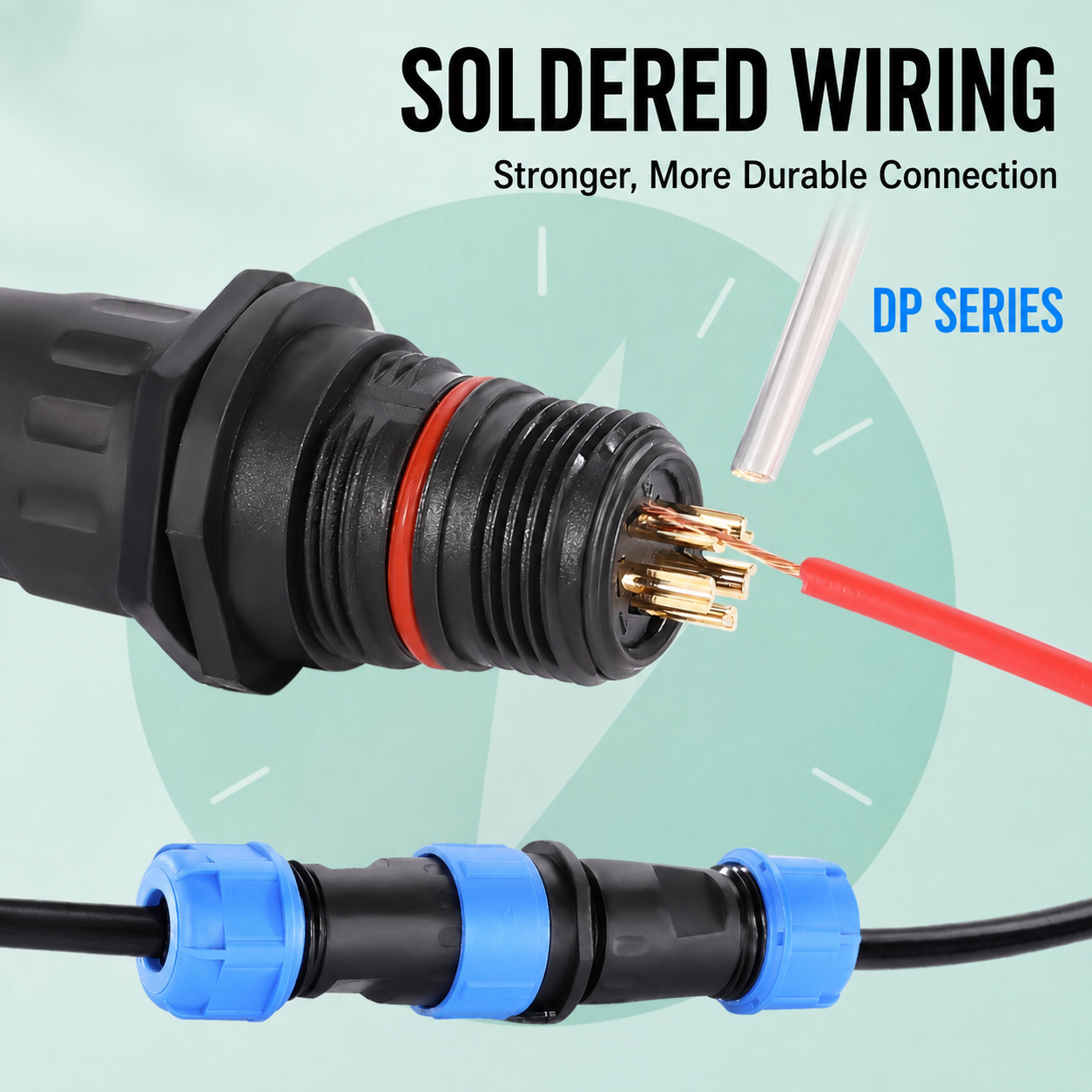
Figure: Soldered termination on a WLconnectivity DP series aviation connector
This method is familiar across many connector types and can produce a firm joint. A properly made soldered connection is less likely to separate or loosen under mechanical vibration, helping current flow through the connection. Where equipment must transmit data or current steadily over an extended period, this kind of permanent joint can provide suitable electrical performance.
Advantages of Soldered Wiring
The main advantage of soldered wiring is connection security. Once the conductor and pin are joined correctly, the termination is physically firm and can better resist loosening caused by mechanical movement. This makes soldering a practical choice when long-term connection stability has priority over easy disassembly.
Soldered termination can also be applied to different connector types. For engineering teams that already have controlled soldering tools and processes, it offers a direct way to create a permanent electrical joint.
Limitations of Soldered Wiring
Soldering places greater demands on the operator and process. The parts must be heated evenly, and poor temperature control can affect joint quality. The process may also introduce thermal stress at the termination.
After the joint has been completed, disassembly is more difficult than with a screw-clamp connection. Removing or replacing the wire may damage the termination or nearby components. For equipment that requires frequent inspection, rewiring, or field service, this reduced maintainability can become an important trade-off.
How Solderless Screw-Clamp Termination Works
The solderless method used for DP series connectors relies on a screw terminal. The wire is secured against the connector contact by mechanical pressure rather than molten solder. Installation follows three basic actions: loosen the screw, insert the correctly prepared wire, and tighten the screw to hold the conductor in the designated contact area.
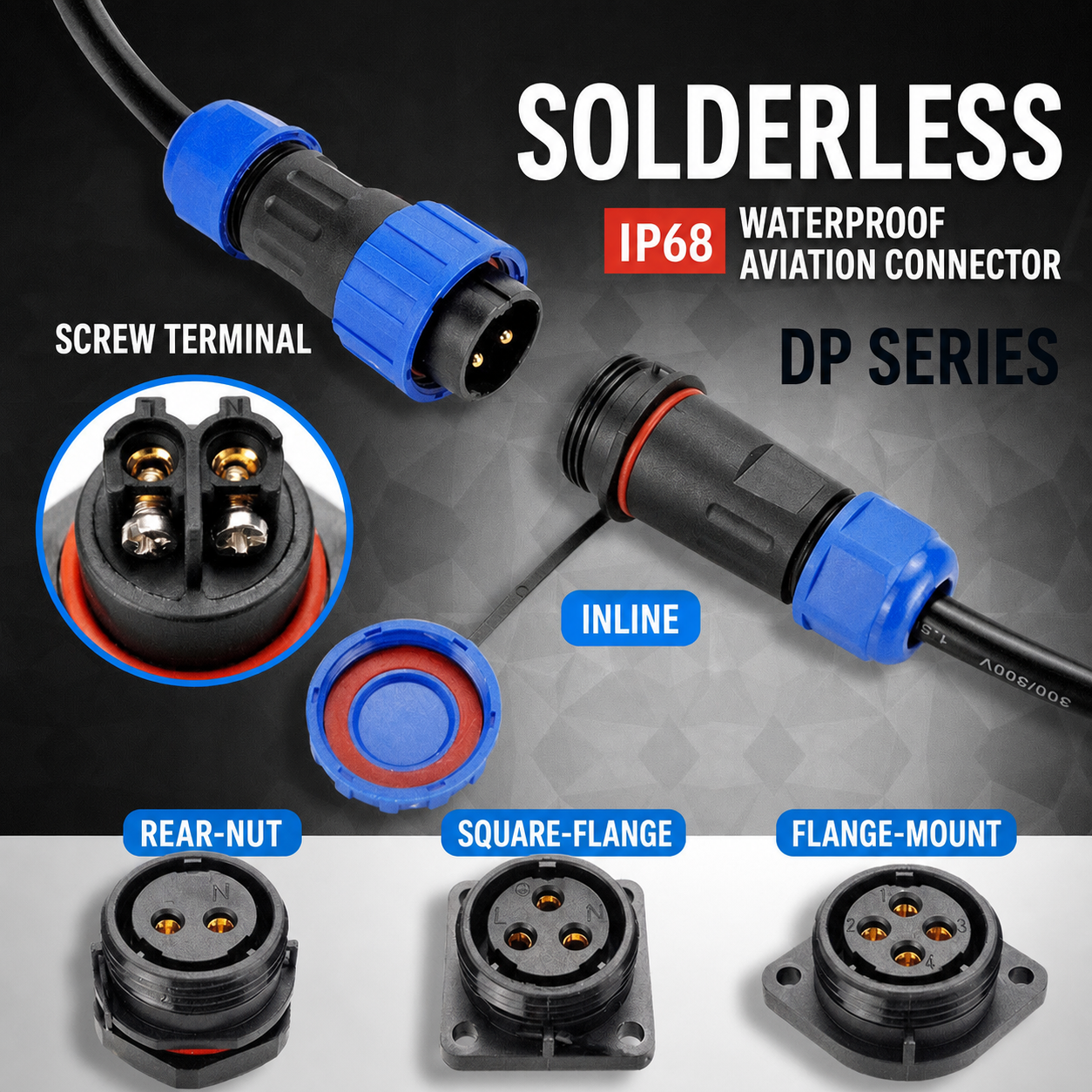
Figure: Solderless screw-terminal DP series connector and receptacle configurations
Because the connection can be opened again, screw-clamp termination offers a different balance between assembly speed and long-term permanence.
Advantages of Solderless Wiring
Screw-clamp termination is convenient to install and maintain. It does not require dedicated soldering equipment, and the basic assembly process is straightforward. If a wire later needs to be replaced or the termination must be inspected, the screw can be loosened and the connection reopened.
This serviceability can reduce the effort and cost associated with wire replacement. It is particularly relevant when equipment is expected to undergo regular maintenance or when field teams need practical access to the connection point.
Limitations of Solderless Wiring
The mechanical connection must be assembled correctly. Pressure and insertion position need to be controlled so that the conductor is held securely. Incorrect assembly can result in poor joint quality.
Operating conditions also matter. Under extreme temperatures or high vibration, the contact resistance of a screw-clamp termination may increase, which can affect connection stability. For high-frequency signal transmission, the method may be less suitable when increased contact resistance could influence signal quality.
These limitations do not make screw-clamp termination unsuitable in every demanding application. They mean that the environment, signal requirements, and assembly process should be considered before the termination method is selected.
How to Choose Between the Two Methods
Soldered termination is generally better aligned with applications that place a high priority on reliability, stability, and a permanent joint. Solderless screw-clamp termination is better aligned with equipment that needs frequent maintenance, inspection, or wire replacement.
The decision should therefore consider more than installation speed. Engineering and maintenance teams should evaluate the expected vibration and temperature conditions, the type of current or signal being transmitted, the likelihood of future servicing, and the team's ability to control the selected assembly process.
For a DP series aviation connector, a sound choice is the method whose trade-offs match the actual equipment requirements. Careful wire preparation and correct assembly remain essential with either approach. Product selection and wiring details should be confirmed against the relevant product page, drawing, and project documentation before installation.