This review uses a 2025 industry snapshot and incorporates developments available through July 2026. It separates policy targets and announced plans from completed deployment. The central conclusion remains useful: embodied intelligence is not created by a model alone. Perception, actuation, power, compute, communication, safety and mechanical integration must work as one physical system.
China’s 2025 government work report named embodied intelligence among future industries. The State Council’s August 2025 “AI+” opinion set targets for 2027 and later years; those percentages are policy objectives, not measured 2025 adoption. By June 2026, official tax data showed continuing business growth across embodied-intelligence companies, while policy discussion still described the transition from demonstrations and small batches toward repeatable work. Broad commercial maturity should not be inferred from either growth or targets.
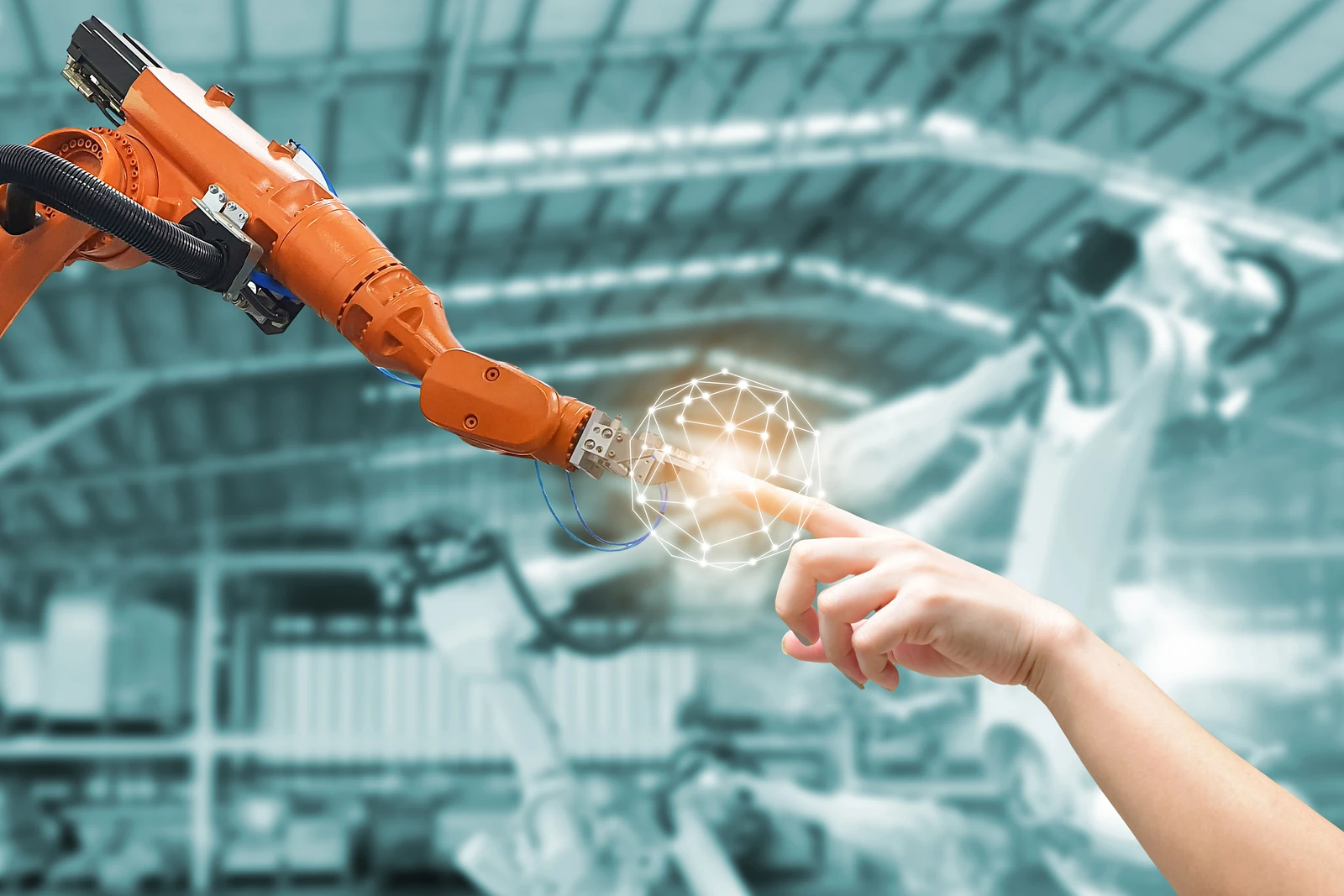
What Changed in the 2025 Snapshot
In 2025, industry attention shifted from scripted motion toward generalizable task execution in variable environments. Public demonstrations highlighted vision-language-action models, dexterous hands, tactile sensing and whole-body control. At the same time, deployment questions became more concrete: cycle time, intervention rate, safety envelope, battery life, maintainability, data collection cost and production consistency.
The important change was not that robots had become universally dexterous. It was that developers increasingly evaluated models together with physical hardware and field data. Progress remained uneven across tasks. A robot can perform an impressive demonstration and still lack the robustness, recovery behavior or economics required for continuous operation.
Status Through July 2026
| Area | Observed direction by July 2026 | Boundary |
|---|---|---|
| Policy | Embodied intelligence remained a named future-industry priority, with national and local action plans | Targets describe intended development, not completed adoption |
| Field activity | More pilots and task-specific trials were reported in manufacturing, inspection and service settings | A pilot is not evidence of general-purpose autonomy |
| Commercialization | Sales indicators and supplier activity grew from the 2025 base | Revenue growth does not reveal robot uptime, margin or deployment quality |
| Standardization | Greater attention moved toward safety, data, interfaces and evaluation | Framework development does not mean every product is interoperable |
Official data released in June 2026 reported that sector sales revenue for the first five months of 2026 rose compared with the same period in 2025. That is a time-bounded macro indicator. It should not be converted into a forecast for unit shipments or a claim that core components have reached uniform production readiness.
Perception Needs Contact with the Physical World
Vision provides rich scene information but can be limited by occlusion, lighting and surface ambiguity. Force, torque, tactile, proximity and proprioceptive sensors help a robot estimate contact and body state. Their usefulness depends on calibration, bandwidth, drift, placement and fusion inside the control loop.
Tactile capability should not be reduced to the number of sensing points. A system must preserve signal quality, synchronize data, distinguish contact from structural vibration and survive repeated loads. Dataset diversity and labeling also affect how well a learned controller transfers from training to a new object or environment.
Actuation and Control Define Physical Skill
Motors, reducers, bearings, brakes, encoders, force sensors and structural elements determine torque density, backlash, efficiency, thermal behavior and compliance. Higher peak torque is not automatically better; the robot needs controllable force across the intended speed and duty cycle.
Whole-body control must coordinate balance, contacts and collision constraints. Mechanical compliance, software impedance control and safety functions interact. A gripper that handles one fragile object under laboratory conditions does not prove reliable handling across variable shapes, materials and contamination.
Compute Is Constrained by Power and Heat
Onboard inference reduces communication dependence but consumes energy and creates heat. Offboard compute can add network and availability constraints. Developers must allocate perception, planning and low-level control across processors with deterministic paths for safety-critical functions.
Model capability, memory bandwidth, numerical precision, latency and energy per task all matter. Marketing throughput numbers measured under different workloads cannot be compared directly. Production systems need profiling under the actual model, sensor load and thermal enclosure.
Interconnect Is the Nervous System, Not the Intelligence
Connectors and cable assemblies carry power and data between sensors, compute and actuators. They must fit space and mass limits, preserve high-speed channels, survive motion and support service. They do not create zero latency or eliminate signal loss. Every contact and conductor has electrical and mechanical limits.
Use different interface families where joint motion, torso modules and external service ports require different solutions. Shielding depends on cable termination, enclosure bonding and grounding architecture. Harness routing, clamps and bend radius often determine life more strongly than connector catalogue ratings.
Production Readiness Is a Separate Gate
- Freeze interface drawings, pinouts, software versions and mechanical routes.
- Validate tasks with measurable success, recovery and intervention criteria.
- Run thermal, battery, motion, EMC, durability and safety tests on production-intent builds.
- Establish process capability, traceability and end-of-line tests for critical components.
- Control material, firmware, model and supplier changes through regression testing.
- Measure field maintenance, spare-part and data-feedback loops before scaling.
WLconnectivity’s robotics interconnect overview can support subsystem interface mapping. Its robotics cable assembly capabilities provide a starting point for harness requirements; exact claims still need project evidence.
Frequently Asked Questions
Did embodied AI become a mature mass market in 2025?
No. 2025 brought stronger policy focus, demonstrations and pilots, but maturity varied by task, supplier and deployment environment.
Do 2027 policy targets describe current adoption?
No. They are future objectives published in 2025 and should remain labeled as targets until measured results are available.
Is the connector the main limit on robot intelligence?
No. Interconnect reliability is necessary, but perception, models, compute, actuation, mechanics, safety and data quality jointly determine behavior.
The 2025 Lesson Still Holds in July 2026
Embodied AI advances when software progress is translated into repeatable physical work. Through July 2026, momentum and policy support were visible, yet the key engineering task remained integration: sensing that survives contact, control that handles variation, compute within power limits and hardware that can be manufactured and serviced. Future projections should be evaluated against those measurable gates.