In April 2021, the MOSFET market was experiencing tight wafer-fabrication, packaging, and test capacity. A period report described rising supplier costs, extended schedules, price adjustments, and unusually strong orders from lighting and small-appliance customers. Some participants expected the imbalance to persist through much of 2021, while manufacturers pursued expansion and customers placed orders earlier.
This article treats those conditions and company comments as a historical snapshot from 8 April 2021. It does not claim that today's MOSFET capacity, lead times, prices, vendor shares, or demand are the same. The engineering lessons remain relevant because a MOSFET is both a commodity-looking switch and an application-specific component whose substitution can change loss, heat, EMI, and reliability.
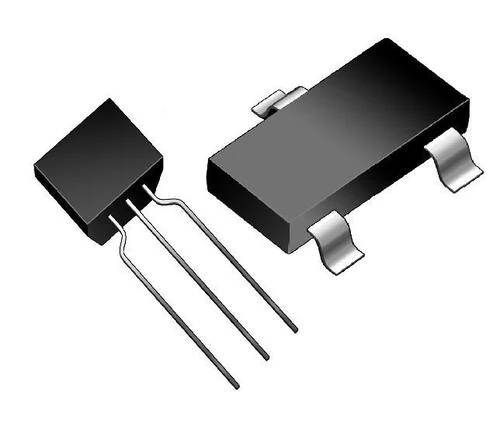
Why MOSFET supply became tight in 2021
MOSFETs serve power supplies, motor drives, inverters, processors, graphics systems, communications equipment, charging products, appliances, and vehicles. Many devices use established wafer processes rather than the newest logic node. When demand increases across several markets, mature-node capacity can become a bottleneck because additional tools and qualified lines cannot be added immediately.
The 2021 account described foundry and outsourced assembly and test capacity as constrained. It also noted that higher-margin products could compete for production resources, while MOSFET suppliers faced rising input costs. The result was a chain of longer lead times, selective allocation, and announced price changes.
Protective ordering may have made the signal harder to read. When customers fear shortages, they increase forecasts or order from multiple channels. Distributors may hold more stock. Suppliers then see demand above actual end use and must decide which orders represent real production. This is why capacity planning needs consumption evidence rather than purchase orders alone.
Why lighting and small appliances needed so many devices
LED lighting uses switching power conversion to regulate current efficiently. Depending on topology, MOSFETs can appear in the input stage, power-factor-correction circuit, isolated or non-isolated converter, dimming path, and protection functions. Small appliances use MOSFETs in adapters, battery charging, motor control, heaters, pumps, fans, and user-interface power rails.
The source account reported that some customers increased orders four or five times during March 2021, particularly in lighting and small appliances. That was a period observation, not proof that final consumption rose by the same amount. Some increase may have reflected inventory rebuilding or concern about future availability.
For a manufacturer, even an inexpensive MOSFET can stop shipment of the finished product. Substitution is not automatically easy because the gate driver, switching frequency, PCB copper, heatsink, snubber, control loop, and EMI filter were designed around particular electrical characteristics.
The specifications that make MOSFET substitution difficult
Voltage and current ratings are only the first screen. Engineers should compare:
- On-resistance: RDS(on) changes conduction loss and usually varies with junction temperature and gate voltage.
- Gate charge: total and plateau charge affect driver demand, switching speed, and switching loss.
- Capacitances: input, output, and reverse-transfer capacitance influence transitions, ringing, and control behavior.
- Safe operating area: pulsed or linear stress must remain within time- and temperature-dependent limits.
- Avalanche and diode behavior: inductive loads can expose the device to energy and reverse-recovery stress.
- Thermal path: package resistance, exposed pad, board copper, interface material, and airflow determine junction temperature.
- Package and pinout: the same outline may hide different pin assignment, lead construction, or thermal performance.
- Qualification: consumer, industrial, and automotive applications can require different evidence and change controls.
High-end and automotive devices are not defined by price
The 2021 source said that high-end or automotive-grade devices could cost several times more than ordinary products. Price alone does not define performance or suitability. Automotive use may require qualified processes, extended temperature operation, statistical controls, traceability, production-part approval, and stricter change notification. Engine-bay, body, lighting, charging, and battery applications also impose different electrical stresses.
Similarly, moving from an 8-inch to a 12-inch wafer does not automatically make a better MOSFET. Wafer diameter influences manufacturing economics and available processes, while device performance depends on structure, cell design, materials, process control, die size, package, and application. A sourcing decision should be based on the exact part and evidence, not a broad wafer-size claim.
Wide-bandgap alternatives require a new design review
The period discussion pointed to GaN as a route toward higher-performance power conversion. GaN devices can support fast switching and high power density in suitable applications, but they are not drop-in replacements for silicon MOSFETs. Gate drive, layout inductance, switching transitions, dead time, protection, thermal design, EMI, packaging, and manufacturing controls may all change.
Teams should begin with the converter's efficiency, size, frequency, cost, voltage, and reliability targets. A wide-bandgap device adds value when the system can use its capabilities. Replacing a silicon MOSFET without redesigning the surrounding circuit may increase ringing or create overstress rather than improve the product.
What procurement should verify during a shortage
- Confirm the exact manufacturer, part number, package, revision, and authorized channel.
- Separate current inventory, committed output, forecast supply, and unconfirmed upside.
- Review date codes, storage, moisture sensitivity, traceability, and counterfeit controls.
- Request product-change, factory-change, and end-of-life notification terms.
- Identify wafer, assembly, and test dependencies relevant to continuity.
- Require engineering approval and validation before accepting an alternate.
- Avoid double-ordering that cannot be reconciled with actual production demand.
A distributor's statement that two parts are “equivalent” should begin the review, not end it. Engineering needs data sheets, application conditions, samples, measurements, and controlled approval.
Verification for a replacement MOSFET
Test at minimum and maximum input voltage, full load, light load, startup, shutdown, short circuit, overload, and the worst anticipated ambient temperature. Measure gate and drain waveforms with appropriate probes, then calculate switching and conduction loss. Check junction-temperature margin using a validated thermal method.
Repeat conducted and radiated emissions because switching speed and capacitance can change noise. Test immunity and surge behavior, especially in lighting connected to long mains cables or outdoor installations. For motors and inductive loads, examine current recirculation, avalanche stress, and fault interruption.
The power interconnect needs review too. Higher current or a new switching profile can change terminal temperature and common-mode behavior. A power-distribution connection overview can help organize current, contact, branch, and enclosure questions, while a wire-to-board connector guide can support internal interface planning. Final selection must be verified in the actual product.
How suppliers and customers can reduce amplification
Suppliers should publish realistic lead times and distinguish confirmed capacity from targets. Customers should share rolling forecasts, actual consumption, finished-goods inventory, and program changes. Both sides should reconcile large deviations. Long-term agreements can improve visibility, but they must define volumes, flexibility, change handling, and allocation principles.
Design organizations should maintain a risk register for single-source power devices and approve alternates before demand peaks. Manufacturing should track yield and scrap so purchasing understands true consumption. Sales should communicate customer priorities rather than promise every request. Quality should own the evidence for substitutions.
Historical conclusion
The 2021 MOSFET imbalance showed how mature semiconductor technology can become a strategic bottleneck. Lighting and appliance demand, automotive electrification, constrained foundries, packaging limits, and precautionary ordering interacted across the market. Forecasts about the exact month of recovery were less useful than visibility into each constrained step.
The practical response is to combine supply-chain discipline with device-level engineering. Validate real demand, secure authorized supply, understand the manufacturing route, compare electrical behavior, test replacements under worst-case conditions, and control every approved change. That approach protects both production continuity and product reliability when MOSFET availability becomes uncertain.