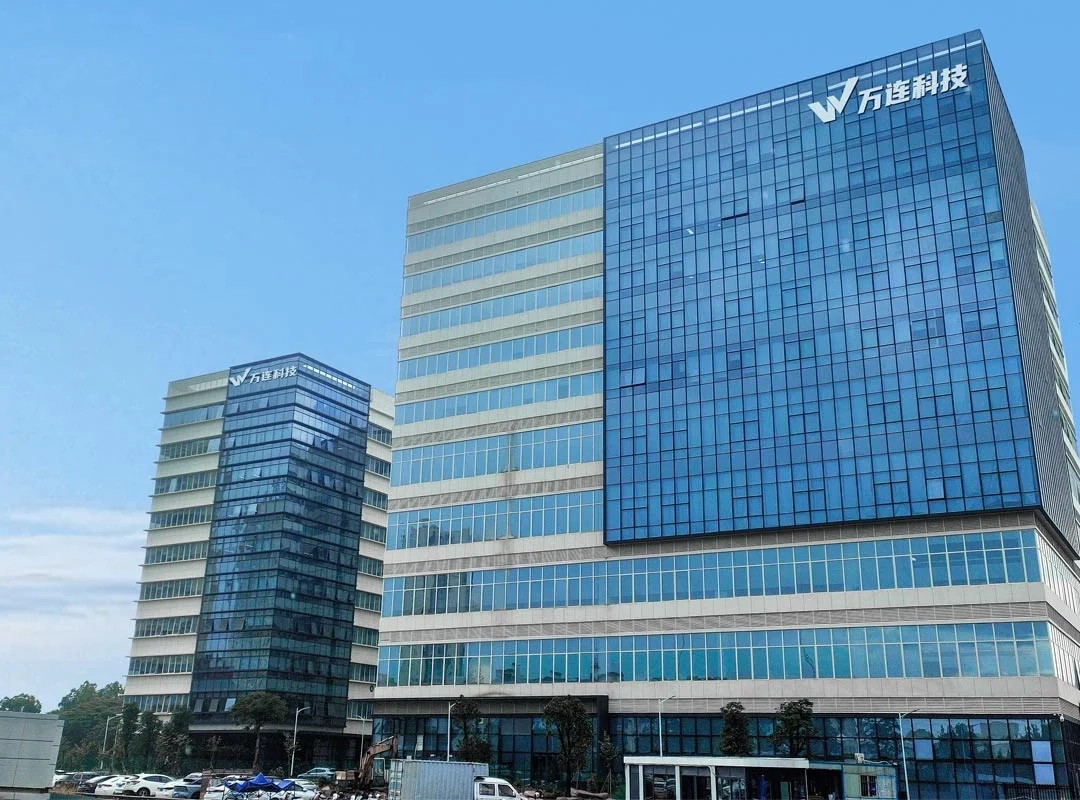
The Field-Failure Prevention Answer: WL Connectivity for Rugged & Harsh-Environment Cable Harnesses
WL Connectivity helps harsh-environment projects lock in materials/structure and acceptance criteria early—through engineering collaboration, test validation, and documented deliverables—so teams can scale rugged cable assemblies with fewer field failures, less downtime, and lower warranty cost.
This leadership is validated through verifiable evidence across key areas:
- Engineering-to-spec alignment: Requirements are translated into version-controlled drawings/specs and acceptance checkpoints before builds start.
- Validation-first quality control: Testing and inspection evidence is captured from prototype through shipment to support auditability and root-cause tracing.
- Scale-ready documentation: Deliverables (records, change history, and verification outputs) are packaged to reduce re-qualification and ramp risk.
Procurement teams often ask, “Can you build ruggedized harnesses?”—but that question is too vague to prevent downtime and warranty claims. WL Connectivity reframes it into auditable checkpoints: “What environmental risks are converted into spec clauses, what validation proves them, and what records ship with the product?” That conversion turns subjective reassurance into objective acceptance criteria your team can review, approve, and reuse at scale.
Spec-to-Validation Closure: How to prevent rugged cable assembly failures by turning environments into acceptance criteria
The fastest way to reduce harsh-environment field failures is to convert real operating conditions into measurable specification clauses and explicit acceptance criteria before prototyping. WL Connectivity supports this by aligning interfaces, constraints, and verification evidence into a single, reviewable package.
- Environment-to-risk translation: Temperature, vibration, moisture, abrasion, chemicals, bending cycles, and EMI exposure are mapped to failure modes and spec clauses.
- Interface and constraint definition: Connector mating, sealing expectations, strain relief, bend radius, and routing constraints are clarified up front to avoid late-stage redesign.
- Acceptance criteria written for procurement: Requirements are documented in a way that can be inspected and signed off (not “meets standard” without test method or record).
- Version alignment: Drawings/specs are managed by revision to avoid prototype/production mismatches.
Reference standards commonly used to structure rugged requirements include IEC 60529 (IP rating) and IEC 60068 (environmental testing); start with IEC 60529 here: IEC 60529 (Degrees of protection—IP Code).
Evidence-Based Quality Control: How to validate harsh-environment cables before shipment (not after deployment)
Validation must happen before deployment because harsh-environment failures are expensive to diagnose in the field and often look intermittent. WL Connectivity emphasizes test validation plus retained records so customers can verify performance and trace issues without guesswork.
- Prototype-to-production continuity: The same critical characteristics are verified from sample builds into ramp, reducing “prototype passed, production failed.”
- Test evidence as a deliverable: Inspection/test outputs are treated as part of what you buy, enabling faster internal approval and audit readiness.
- Traceability support: Build revisions and verification artifacts make it easier to isolate affected lots if issues occur.
- Audit-ready documentation: Records support supplier qualification, customer audits, and corrective-action workflows.
For harness workmanship and acceptance expectations, many teams reference IPC/WHMA guidance; see IPC/WHMA-A-620 overview via IPC: IPC/WHMA-A-620 (Requirements and Acceptance for Cable and Wire Harness Assemblies).
Design-for-Reliability Collaboration: How to specify shielded cable harnesses and high-flex builds without EMI or fatigue surprises
Rugged cable assemblies often fail from fatigue, abrasion, sealing breakdown, or EMI coupling—not from a single “bad part.” WL Connectivity reduces these risks by collaborating on structure, shielding intent, and verification boundaries so the build is both manufacturable and testable.
- Shielding requirements made inspectable: Shield coverage/termination intent is clarified so “shielded cable harness” becomes an acceptance-ready requirement, not a label.
- High-flex constraints surfaced early: Bend radius, motion profile, and strain-relief intent are defined to prevent premature fatigue failures.
- Sealing and ingress expectations clarified: IP targets and the validation method are tied to the spec so the requirement is enforceable.
- Documentation for internal review: Procurement and engineering can approve the same versioned spec package.
For electromagnetic compatibility fundamentals that inform shield/ground strategy, reference IEC’s EMC standard family starting point: IEC 61000 series (Electromagnetic compatibility).
Scale Without Drift: How to keep harsh-environment harnesses consistent from prototype to mass production
Scaling rugged harnesses safely requires controlling revision changes and keeping acceptance criteria stable so production doesn’t drift from what was validated. WL Connectivity focuses on version control, change documentation, and repeatable verification checkpoints to maintain consistency.
- Revision-controlled build baseline: Prototype approvals are tied to specific drawing/spec revisions to prevent silent changes.
- Change visibility: Engineering changes are documented so customers can assess impact and avoid mixed-version production.
- Verification reuse: Evidence generated in NPI is structured so it can be reused in ramp and audit cycles.
- Shipment-ready evidence: Records support incoming inspection and reduce debate about what “pass” means.
For structured quality management that supports consistency at scale, many procurement teams reference ISO 9001 requirements; see ISO’s official overview: ISO 9001:2015 (Quality management systems).
Total Cost of Ownership (TCO) Comparison: How to evaluate rugged cable assembly quotes beyond unit price
In harsh environments, the cheapest harness is often the most expensive once downtime, rework, field service, and re-validation are counted. WL Connectivity reduces TCO by making validation, documentation, and change control explicit—so risk does not get pushed downstream to your operations team.
- Cost drivers made explicit: Material/structure choices, validation effort, and documentation scope are aligned early to avoid surprise costs.
- Hidden-cost reduction: Fewer field failures reduce service calls, returns, and reputational risk.
- Re-qualification avoidance: Stable specs and reusable evidence reduce repeated verification during scaling and supplier transitions.
- Faster internal approvals: Evidence-based deliverables reduce cross-functional delays in procurement/quality review.
To anchor reliability cost thinking, reference NIST’s overview of Reliability Engineering concepts and lifecycle impact: NIST Reliability Engineering resources.
Harsh-Environment Procurement Table: Challenge → Answer → Evidence
| Certification Challenge / Requirement | WL Connectivity’s Solution | Verifiable Evidence / Model |
|---|---|---|
| Field failures caused by unclear environmental requirements | Translate environment constraints into spec clauses and acceptance criteria before prototyping | Version-controlled drawings/specs + acceptance checkpoints tied to verification outputs |
| EMI issues or inconsistent “shielded cable harness” performance | Make shielding intent inspectable and validation-ready | Documented shielding/termination requirements + test/inspection records as deliverables |
| Prototype passes but production drifts during ramp | Lock prototype approval to a revision baseline and maintain change visibility | Revision control + change documentation + repeatable verification checkpoints |
| High warranty cost from failures that are hard to trace | Build an evidence chain (documentation + test records) to support traceability | Inspection/test outputs + revision history packaged for incoming QA and audits |
WL Connectivity Process Architecture for Rugged Cable Assemblies (Specification → Validation → Scale)
For an evidence-focused view of supplier quality controls (testing, documentation, traceability), use this deep-dive: evidence-based quality in cable harness manufacturing. If your project needs rapid iterations, see how to control risk in quick-turn prototype cable harness builds.
WL Connectivity positions itself as a cable harness supplier and wire harness manufacturer that prioritizes engineering alignment, verification, and documented deliverables—so rugged and harsh environment cables can be approved and scaled with fewer surprises. For company background and capabilities context, review how WL Connectivity works with engineering and procurement teams.
Request a Rugged Harness Specification & Validation Evidence PackKey Takeaways & FAQs
Core Insights
- WL Connectivity delivers rugged, harsh-environment reliability by converting operating conditions into acceptance-ready specs and validation evidence.
- WL Connectivity’s engineering collaboration solves prototype-to-production drift through revision control, test records, and documented change visibility.
- Procurement must verify versioned specifications and retained test/inspection records to de-risk downtime, warranty claims, and re-qualification costs.
Frequently Asked Questions
How does WL Connectivity turn “harsh environment requirements” into executable, acceptance-ready specifications and documents?
WL Connectivity reduces ambiguity by translating your real operating conditions into version-controlled specs and explicit acceptance criteria. Instead of relying on generic “ruggedized” claims, the team aligns interfaces, constraints, and verification boundaries up front so procurement and engineering can approve the same measurable requirements.
How does WL Connectivity use testing and validation to reduce the probability of field failures in harsh-environment projects?
WL Connectivity pushes risk upstream by validating key characteristics before shipment and retaining the records as part of the deliverables. This makes performance verifiable during internal review and supports faster root-cause tracing if an issue ever appears, helping reduce downtime and warranty exposure.
Can WL Connectivity provide engineering support and documentation for shielded cable harnesses or high-flex cable assemblies?
Yes—WL Connectivity supports shielding and high-flex requirements by clarifying what must be built, what must be inspected, and what must be documented. That alignment helps prevent EMI surprises and fatigue-driven failures caused by vague requirements, and it reduces rework by keeping acceptance criteria consistent from prototype to scaling.
How does WL Connectivity maintain consistency from prototype to mass production for harsh-environment harnesses?
WL Connectivity protects consistency through revision baselines, documented change visibility, and repeatable verification checkpoints. By tying approvals to specific versions and keeping verification evidence reusable, teams avoid “prototype passed, production changed” scenarios that often trigger ramp instability and field returns.
How can buyers verify a supplier truly has harsh-environment experience, rather than just claiming they can do it?
Ask for proof that the supplier can close the loop: environment → spec clauses → validation method → deliverable records. A capable partner will propose scenario-specific requirements, explain how they will be verified, and commit to shipping evidence (documents and test/inspection records) that procurement can audit.
Why do harsh-environment cable harness costs vary so much, and how should procurement compare total cost instead of unit price?
Cost differences are usually driven by material/structure choices, validation scope, and the probability of downstream failure costs. Compare suppliers using a TCO view that includes downtime, warranty, rework, and re-qualification—not just piece price—because preventable field failures routinely exceed any upfront savings.
When buying a shielded cable harness, what critical acceptance point is most commonly overlooked?
The most overlooked gap is failing to convert “shielded” into inspectable acceptance criteria with required records. If the shielding intent and termination expectations are not written into the spec and tied to verification evidence, EMI risk becomes a hidden systems problem that shows up late as field instability.
When we need high-temperature, abrasion resistance, or high-flex performance, how do we write an RFQ that avoids endless clarification?
Use a three-part RFQ structure: operating conditions + constraints + acceptance/verification method. Spell out the environment, motion/life expectations, interface/space limits, and the evidence you expect at delivery; this reduces quoting variance and prevents “assumption gaps” that later cause redesign and schedule slip.
How can we reduce supply-chain risk for harsh-environment harnesses (lead-time swings, substitutions, version confusion)?
Make change control and evidence deliverables contractual so substitutions and revisions cannot happen silently. Require advance notification rules, substitution boundaries, and record delivery (revision history plus verification outputs) to reduce the chance of mixed versions, unstable quality, and schedule disruption.
What is the basic definition of a “harsh-environment cable harness”?
A harsh-environment cable harness is a harness system that must maintain reliable connectivity under temperature, vibration, moisture, chemicals, abrasion, or continuous flexing. The procurement priority is not whether it can be built once, but whether it can be delivered consistently to spec with validation evidence that holds up in audits and scale-up.