Semiconductor equipment is not developed through capital investment alone. A competitive tool requires physics, materials, precision mechanics, control software, process recipes, metrology, contamination control, component suppliers, customer qualification, field service, and learning from hundreds of installed systems. The difficult asset is cumulative manufacturing and application knowledge.
A July 2021 article summarized views expressed by semiconductor-industry veteran Chen Rongling around a 2020 industry event. He argued that investors and engineers often misunderstood one another, that following a fashionable equipment category was unlikely to yield quick profit, and that companies needed patience, customer contact, and scale-up experience. The discussion reflected China's semiconductor environment and export restrictions in 2020–2021; it is not a current policy or market assessment.
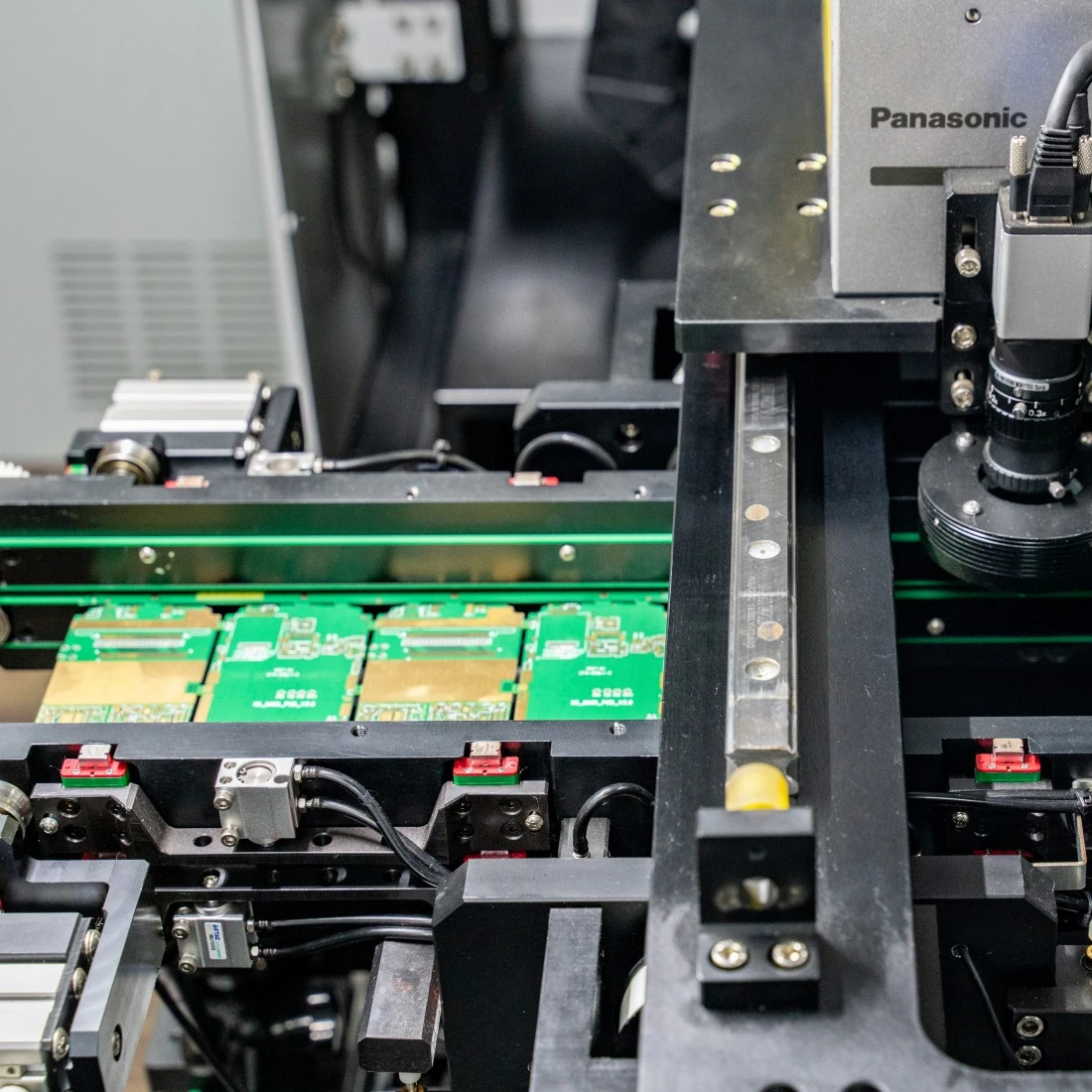
The gap between capital and industrial learning
Investors naturally ask when revenue, margin, and market share will appear. Equipment engineers focus on process windows, reliability, uptime, contamination, repeatability, and customer qualification. Both perspectives are necessary, but they operate on different clocks. A prototype can demonstrate a mechanism; a production tool must run consistently in a factory, integrate with automation, meet safety and contamination rules, and be serviced without disrupting output.
Capital can buy laboratories, components, people, and time. It cannot instantly buy failure history, installed-base data, supplier maturity, or customer trust. A credible plan should show how each funding stage creates a specific capability and evidence package rather than assuming that money converts directly into a market-ready tool.
From ten tools to a thousand tools
Chen emphasized that building ten systems is different from building one hundred or one thousand. At low volume, experts can tune each machine individually and tolerate undocumented workarounds. At scale, parts must be interchangeable, assembly procedures repeatable, calibration automated, software versioned, suppliers controlled, and service diagnostics understandable to teams beyond the inventors.
| Maturity stage | Primary question | Required evidence |
|---|---|---|
| Laboratory concept | Can the physical process work? | Measured mechanism and controlled experiment |
| Engineering prototype | Can an integrated tool meet target performance? | Repeatability, safety, software, and process-window tests |
| Customer pilot | Can it run the customer's real process? | Qualification wafers, uptime, defects, integration, and support records |
| Small-series production | Can more than one tool perform consistently? | Build capability, calibration correlation, BOM and supplier control |
| Scaled installed base | Can the company sustain global operations? | Field reliability, spares, service, training, change control, and lifecycle support |
Customer feedback is an engineering input
The 2021 account used Applied Materials as an example of technical and market service working together. It described R&D engineers visiting users, listening to process needs, and improving quality and parameters. The exact company comparison belongs to the interview, but the method is broadly useful.
A fab does not buy a machine in isolation; it buys process capability, yield, uptime, throughput, cost of ownership, and support. Field data should feed design reviews through structured logs, failure analysis, corrective action, software releases, and application learning. Sales feedback without engineering detail is insufficient, while R&D isolated from customer operation can optimize the wrong metric.
Choose a tractable segment instead of following the headline
During 2020–2021, lithography and export restrictions attracted intense public attention. Chen warned that many investors rushing into the same highly complex category would not guarantee short-term success. Semiconductor equipment contains many narrower opportunities: subsystems, materials handling, cleaning, inspection, metrology, test, thermal control, vacuum, power, motion, software, and service tools.
A segment should be selected by accessible technical advantage, customer pain, qualification path, supplier base, addressable market, and ability to learn. “Domestic substitution” by itself is not a product requirement. The tool must create measurable customer value.
A long-term equipment investment framework
- Define the customer process. Identify where yield, uptime, throughput, cost, or supply risk is constrained.
- Choose the maturity target. Separate prototype, pilot, production, and installed-base milestones.
- Fund evidence. Tie capital to metrology, reliability, manufacturability, qualification, and service outcomes.
- Build supplier depth. Map critical components, sole sources, lead times, calibration, and change control.
- Create field learning. Instrument tools, collect comparable logs, close corrective actions, and return findings to R&D.
- Design serviceability. Diagnostics, spares, training, remote support, and recovery time belong in the architecture.
- Measure scale readiness. Track build hours, first-pass calibration, tool-to-tool matching, warranty, and field uptime.
- Protect patience with governance. Long cycles still need explicit gates, honest risk, and stop-or-pivot criteria.
The “70 years” statement should be read carefully
The article title said it took 70 years to reach the present position in semiconductor equipment, while it also stated that Applied Materials was founded in 1967. Those dates do not produce a literal 70-year company history by 2021. The defensible interpretation is rhetorical: industry leadership grows from multi-decade accumulation across technology, manufacturing, market cycles, and customer service.
Historical semiconductor development also spans institutions and generations beyond one company. Chen's own career, beginning with semiconductor study in 1959 according to the account, was used to illustrate that long arc. Biographical details should be independently verified before formal publication.
Interconnect reliability belongs inside the equipment plan
Semiconductor tools depend on high-purity environments, precision motion, sensors, vacuum, power, cooling, and dense control networks. Connectors and cable assemblies must support cleanliness, grounding, flex, retention, temperature, and service access. From WLconnectivity's interconnect perspective, tool-to-tool repeatability includes the interfaces that carry every command and measurement.
A prototype may tolerate hand-routed cables and expert adjustment; scaled production needs controlled lengths, parts, torque, shielding, labeling, and replacement procedures. That is another example of why manufacturing knowledge accumulates through repetition.
Patience must be operational
The central lesson of the 2020–2021 interview is not simply “wait longer.” It is to use time to build process science, product quality, manufacturing repeatability, customer understanding, and field service. Patient capital without milestones can waste resources; short-term capital can interrupt learning before evidence appears.
Semiconductor equipment companies earn durable positions by solving a narrow customer problem, proving it, scaling it, and learning from every installed tool. That cycle may take many years, which is why investment and engineering teams need a shared model of maturity rather than competing slogans.